Monday, May 31, 2010

Week 32: Well, that's all everybody. Thanks for coming.


I'll keep my answer to last week's question pretty brief. Pretty much, from what I was able to dig up on Criss, he used to make claims to having these supernatural powers, but as his popularity increased, his image shifted to more of just an entertainer than a psychic. He doesn't really make claims that he has these powers, it's more something that he wants the audience to assume.


This week has been all about the controversy of alternative medicines. Do they really work? If they don't, should they be allowed to sell them? Can they be harmful? Why doesn't the FDA approve them. I'm just going to begin by saying that when in comes to alternative medine, I'm a major skeptic. I don't believe that any of what is being sold can cure you, I don't think footrubs will make negative energy leave my body, and I don't believe that placing a bunch of tiny needles in my body will help my chi. My opinion, however, doesn't seem to be a common one because people are still buying these products that aren't proven to work. I personally don't understand why people waste their time, but clearly there's something drawing them to the products.


So the question is, is okay to sell these placebos? Some would argue yes because if someone's dumb enough to pay for it, that's their own fault. Well, that seems unfair because I honestly don't know enough nor do I have the time to learn everything about what works and what doesn't. It seems like these companies are cheating the public because they are taking advantage of the fact that so many people know so little about medication. There's no way something that has been diluted down to where it is nonexistant would work, but there are plenty of people out there that don't know that that's what "homeopathic" means.


There also hasn't been enough research to prove that every alternative drug that is taken is 100% safe to be consumed. Sometimes they react with a prescription and harm, or in some cases even kill the consumer. When there isn't enough research on something, that seems like a red flag to me. It should be saying to our government "This isn't ready for public consumption yet", not "Oh what the hell, it's their choice to risk it." So maybe hospitals should stop offering this phony medicine in an extra wing of the building just to make a quick buck. Maybe the government should decide that the drug isn't ready for the public. Maybe the consumer should stop buying into that kind of thing. Yeah, that would be nice.


Sources:

Homeopathy. Photograph. The Penzance Horse. Web. http://www.thepenzancehorse.com/2009/NEWSLETTERS/JULAUG09/homeopathy-stockexhng.jpg.


That Mitchell and Webb Look: Homeopathic A&E. Youtube. Web.
http://www.youtube.com/watch?v=HMGIbOGu8q0.

Sunday, May 9, 2010

Week 30/ 31: Magic!

Last week I wanted to know what happened to Rwanda after the genocide of 1994. After the Patriotic Front defeated the Hutu army, Rwanda was still faced with poverty, destruction, and major diseases like cholera. The Front began rebuilding from scratch, insuring that the MRND (the ruling party during the genocide), would never be able to regain power. Surprisingly, with little international aid, the RPF completely rebuilt the government and the economy from scratch, a feat that seems really difficult in hindsight. The first presidential elections were held in 1994.

These past two weeks we shifted gears quite a bit. We finished off the Rwandan discussion towards the beginning of the week, and we're now looking at the principles of magic. We have begun to analyze what makes magic possible, and why our minds allow us to see things that aren't there. All magicians follow the 7 main basic principles of magic:

1. Palm- concealing an object
2. Ditch- Removing the object
3. Steal- take a needed object inconspicuously
4. Load- get the object into position
5. Simulation- pretend to do something to distract the audience
6. Misdirection- lead the audience in a completely wrong direction
7. Switch- swap the two objects

Voila! Magic. Fortunately, it's much more complicated than that. All this is occurring within seconds of each other, keeping the audience completely in the dark as to what's going on. The main illusion that the magician creates is really just a trick of the mind. Nothing is occurring that bends the laws of nature, but the audience allows for our minds to be tricked into thinking it does. Magic is completely reliant on human psychology. For example, the Barnum Effect is the ability to convince someone that something completely false is entirely true.

Most of the tricks performed by magicians require the audience to not be at full attention, where misdirection comes in. Misdirection is used to point the audience exactly where the magician wants them to look in order to continue the trick undetected. It might be a simple point of the finger or something even more subtle and difficult to pick up. Often, misdirection is the hardest thing in a trick to spot when it is occurring because it is the most crucial in any illusion. If it is not carried out correctly, then the trick can be ruined.

Over the years, magic has had the opportunity to evolve with technology. As science becomes more in-depth, magic has the ability to grow and become more elaborate. Technology is often used by many magicians as a means of making their tricks more impressive and even more difficult to figure out. For instance, in the video we watched, a magician used a computer program where he was able to plot out an extensive illusion that made it appear that he moved a mountain. Technology that wouldn't have been readily available 20 years ago can now help illusionists perform what seems to be the impossible.

What I found most interesting was the relationships between magicians and "psychics". I had no idea they hated each other. I didn't even know that there was much of a difference between the two, but as James Randi explains, magicians let you know from the start that they are going to try to fool you. They let you know their performance isn't real, leaving it up to you to figure out how it is done. "Psychics" (note the quotation marks) on the hand, claim that their power is purely supernatural and that what they perform cannot in any way be replicated by mortals. People like Uri Geller make claims that they have unobtainable gifts.

So what's the harm in that? Why does it matter if someone claims to have these paranormal abilities? Well, for one thing, if a magician and a psychic perform the same show, who are people more inclined to go see. Probably the guy who claims his magic is real, not some parlor trick. It makes sense because we go to magic shows to see magic, so naturally we want to see those guys that can read minds and do things that normal humans can't. Therefore it not only takes business away from magicians, but also makes them look inferior. That is why magicians like James Randi spend so much time trying to expose frauds like Uri Geller.

But it still seems strange that people would believe claims made by people like Geller. Science proves that what they do is impossible, yet people still believe it. It's because we want to be amazed. We let our minds get fooled because we want magic and the impossible to be real. A magician never reveals his tricks because deep down we don't want him to. Most of us like to keep the mystery a secret because otherwise it loses its impressiveness.

The movie alluded quite often to Criss Angel. I am familiar with a lot of his work, but I have no idea where he stands on the whole "magician vs. psychic" debacle. Does he claim to have supernatural powers like Uri Geller? Iunno. I'd like to find out, though because he seems to be one of the most recognizable faces in the magic industry currently.

Sources:
Penn and Teller. Photograph. Vox. Web. http://a0.vox.com/6a00c2251d306b604a00cd978a2c98f9cc-320pi.

Uri Geller. Photograph. Crockatt and Powell. Web. http://crockattandpowell.com/blog/uploaded_images/Uri-744501.jpg.

Sunday, May 2, 2010

Week 29: Ghosts of Rwanda

Last week I wanted to read up a little more on the origins of the Israeli-Palestinian Conflict, so I could better understand the opinions of both sides of the argument. I didn't know that the conflict originated back in the early 19th century when the Ottoman Empire was under control of Palestine. At that time, the conflict was completely religious based and had nothing to do with nationality. After the Ottoman Empire was defeated in World War I, it was unclear to whom the land should belong. The Jewish people thought they deserved to have the land back, while the Muslims thought since they already occupied it, they deserved it. Thus the Conflict began. Matters only became worse when the British Mandate of Palestine forced many Palestinians out of their homes, making them bitter towards the Israeli people.

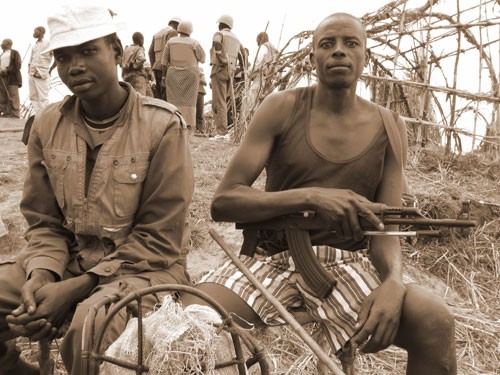
This week we began watching the film "Ghosts of Rwanda", which focuses on the Rwandan Genocide of 1994. I had to do some background research to completely understand what was going on. It appears that Rwanda was a Dutch territory until 1962. At that point, they granted full power and control to the Tutsi people, who, even though they were the minority, were the native people of Rwanda. This angered the Hutu, who were foreign people but made up the majority of the population. In 1994, the plane of a Hutu president was shot down. In response, the Interhamwe ordered a large amount of machetes which they then used to slaughter over 800 thousand Tutsi and moderate Hutu political leaders.

The documentary takes a western perspective of Americans who witnessed the genocide and survived. It was haunting to hear the amount of violence that went on and the brutality of it all. The UN tried to offer protection, but found it too overwhelming, and they had to pull out and leave all those people to fend for themselves. Although it doesn't seem fair that they would do that, at the same time it makes sense. They were putting soldiers lives' at risk for something that seemed inevitable. Just saving the Americans isn't fair at all, but if Tutsi people were loaded into a car or onto an airplane, it puts the lives of everyone at an even greater risk. They had to save as many people as they could, and that unfortunately meant leaving a lot of people to die.

A lot of parallels can be drawn between the Rwandan Genocide and the Israeli-Palestinian conflict. For one thing, the major causes for violence among both occurrences were disputes over land ownership as well as racial discrimination. That being said, what is going on in Israel is a fight between two equally guilty parties, while the Rwandan genocide was just one side exterminating the other.

I found it interesting that in my research I read that Rwanda has made a full recovery and is now a model for other third-world countries. My interest has been peaked. I'd like to know how long this transformation took, what ethnic group holds office, and what makes them a role model. I hope by this next week I'll be able to answer all of those.

Sources:

Ghosts of Rwanda
. Photograph. Content Reserve. Web. .

Interahamwe. Photograph. All Things Pass. Web. .

Sunday, April 25, 2010

Week 28: Promises

This week we started our unit on the Documentary "Promises", which takes place in Israel, Gaza, and the West Bank. Promises follows the lives of seven young Israeli and Palestinian children and gets their viewpoints on the current conflict on their turf. The movie is interesting because all the children seem to have taken some perspective on the Israeli-Palestinian conflict, and they all are very well-informed on the subject, despite their young ages. The documentary gives great incite on the war, and covers both sides respectively. The seven children live within 20 minutes of each other, but different cultural backgrounds show drastic differences in opinions in each of the children.

Daniel and Yarko are two Israeli children that have been raised in a more secular surrounding, which as provided them with a more moderate standpoint on the Conflict. Yarko and Daniel don't hate Palestinians, and ask B.Z. several times if they can meet one because they've never had the opportunity. The two boys show little bias against any race of people, but rather would get to know someone before they judge him. This is apparent in their desire to meet Faraj, a Palestinian boy whom they want to befriend. Their parents, whom are non-practicing as well, decide to allow them to meet Faraj.

Faraj is from a refugee camp in the West Bank, and he supports the Hamas but is on the fence on his opinions of Israelis. At first, he views them only as the oppressor whom he must stand up against, but begins to show more sympathy after meeting Daniel and Yarko. The three boys connect and Faraj begins to realize that not all Israelis fall under the stereotype that he had perceived of them. However, he still strongly believes that he has the birthright to his grandmother's old property that she was forced out of during the British Mandate of Palestine. He has the oportunity to visit her old home with her, only to discover that it had been bombed by Israelis.

Moishe and Mahmoud represent the radical opinions of their parents, but from opposing sides. Moishe, who lives in the West Bank, firmly believes that the Israelis have absolute right to the land of Israel, and he shows an extreme disgust of Arabs. He states at one point in the film that he would annihilate every last Arab if he had the chance. Mahmoud is on the other side of the spectrum, a strong supporter of the Hamas, and believes that the Israelis have no right being in their land. Living in East Jerusalem, he is somewhat integrated with both sides. Neither boy has any interest in meeting the other, and both have very violent attitudes toward the other.

Shlomo is a Hasidic Jew that lives in Jerusalem, and grew up with very Western thinking because his father is from America. His practices are very traditional, but he shows an understanding towards the Arabs that Moishe does not share. Shlomo does not believe that the Palestinians are justified or right, but he can understand where they are coming from and has no violent feelings toward anyone.

Sanabel is a Palestinian who's father is curently in prison for being a journalist. She has justified bitter feelings against the Israelis but wants her father back more than anything.

The movie is very interesting because it shows so many different perspectives from such bright, young children. This next week I'd like read more up on the background of the conflict so I can better understand how it started and formulate my own opinion on it.

Sources:

Promises DVD Cover. Photograph. Fulvue Drive-in. Web. http://www.fulvuedrive-in.com/cover/PROMISES.jpg.

Monday, April 19, 2010

Week 26/27: 30 Days

Over the past two weeks, we've been finishing up our 30 Days unit. After wrapping up "Off the Grid", where two city-dwellers were forced to spend a month in an eco-friendly environment, we moved on to "Out-sourcing." Christopher Jopin, who had recently lost is job to an Indian, spent thirty days in India, performing an "American's" work. It gave him a new perspective on the reality of life outside of America. After spending 30 days working the hours that an Indian man was forced to work, he realized how much he had taken life in America for granted. The majority of India is in poverty, so jobs are of higher necessity to stay alive in India than in America. Most Indians work at the same time Americans are awake, which is late at night in India because it's halfway across the globe.

Not only did Chris encounter these struggles, but he was faced with some of the horrors that Indians have to live with, like violent riots after the death of a politician. Chris's eyes were opened to the prejudice against women that many Indian men participate in. It was interesting to me that such a large transformation occurred when Chris came to the realization that these people weren't just stealing American jobs without putting any effort in. They are just as smart and hard-working as Americans, and they deserve jobs as much as any American citizen.

After "Outsourcing," "Immigration" provided probably one of the most stubborn participants on the show. Frank Jorge is a Cuban American who immigrated here legally with his parents during the Cuban Revolution. Frank is also a gun-toting Minuteman who strongly believes that no one that enters this country illegally should be granted any kind of rights while on U.S. soil. Frank was forced to spend 30 days with no identity, living with a family of illegals, and had to get a job as a day laborer with almost no pay.

If the 30 days were to have gone as Morgan planned, Frank would have undergone the biggest change out of any of the participants. However, Frank showed a lot of close-mindedness to changing his ways no matter what the family through at him. What surprised me most was that Frank even travelled to Mexico and saw what his host family had to live in back in Mexico, yet after the episode was released he showed strong discontent in how the episode made him appear to have a change in heart. Frank shows his disgusted in the episode fabrication here.

"Minimum Wage" followed Morgan and his fiancee Alex as they tried to survive on the bare essentials for 30 Days. They had to find minimum wage jobs, an apartment, and a way to work every morning. They seemed to have a good system worked out until other complications and obstacles were through into the mix. They almost go bankrupt when Morgan's niece and nephew come to visit, and he feels obligated to entertain them during their stay.

This is meant to emulate the difficulty of raising a child when caught up in poverty. They blow through half of the money that they worked so hard to earn to provide entertainment for the kids (a trip to the movies) as well as celebrating Alex's birthday. One thing they weren't paying attention to was that the buses don't run all night. Therefore, after Morgan's and Alex's night out, they are forced to call an expensive cab because they have no other way home.

When Alex is hospitalized for a urinary tract infection, Morgan has no other option but to take on a second job, one that involves a lot of manual labor. Much like a lot of people trying to make it on minimum wage, Morgan overworks himself and breaks his wrist, putting him out of work and leaving him with a huge hospital bill. After they tally up their complete list of bills, the two realize they've already sunk into 3 months of debt just from one month of living on minimum wage.

"Jail" place Morgan in a Henrico County minimum security prison for 30 days where he must spend the time acting and treated like an inmate. The main goal of this episode is to prove that prison isn't doing a very good job of rehabilitation or providing specific care for inmates suffering from withdrawal. Those inmates are on their own for the duration of their sentences, and many of the ones released will just wind up back in prison. Morgan set out to prove that prison was a harsh punishment for petty crimes, and his 3 days in solitary showed how dehumanizing such living conditions can be.

Sources:

Frank Jorge. Photograph. Blazing Monk. Web.< http://www.blazingmonk.com/wp-content/uploads/2010/02/jorge.jpg>.
Jorge, Frank. "Thirty Days With Illegal Aliens—And A Fabricated Conversion." Letter. 18 July 2006. VDare. Web. <>.
Morgan Spurlock. Photograph. Top News. Web. <>.

Sunday, March 28, 2010

Week 25: Hear No Evil

Last week I really just wanted to take it easy and do some research on Heather and her family. Luckily, when i got to class on Monday, Mr. Couillard had already done all the work for me. It turns out, as disclosed by the follow-up video we watched, she did end up receiving the cochlear implant a few years after Sound and Fury took place. In fact, her brothers and mom even went through the operation. Heather's speech is understandable, and she gets along with her hearing classmates very well. Some of the things she's accomplished, like becoming star athlete on her basketball team, would not have been possible had it not been for her cochlear implant. She still remains very involved in the Deaf Community and moves between that and the hearing world effortlessly. Things could have turned out much worse. The implant could have not worked as well as it needed to, or she could have become totally disconnected from the rest of her family and the Deaf Community. However, none of this was the case and the story had a happy ending.
This week was pretty interesting as we starting watching episodes from the TV show 30 Days, in which someone has to survive 30 days in a polar opposite community from what they're used to. The episode we watched this past week placed a devout, conservative Christian in the heart of a Muslim society. He was forced to comply with all the teachings of Muhammad and participate in the rituals performed, including prayer 5 times a day. This struck difficult for Dave, because he was being forced to pray to a god that he did not perceive to be his God. Even though any Muslim would argue that He is the same God, Dave still could not commit to this ideology and believed that prayer to Allah was strictly against everything he believed in.

I also found it interesting that as soon as he put on the typical Islam attire, Dave was suddenly treated differently. Most people wouldn't admit to being racist, but found themselves giving Dave awkward glances. He was even stopped by airport security and thoroughly searched before being allowed to proceed to his plane. He was definitely opened to the discrimination Muslim Americans face everyday, and I think it caused him to show more sympathy towards the Islam community after the experiment was over, even if he and his host family had their disagreements.

This week, we'll be finishing up the second episode, where two city folks have to spend life in a society completely cut off from pollution to the environment. I honestly don't think they'll make, they're struggling way more than Dave did. I'd like to look more into this idea of the hippie commune that leaves as little a carbon footprint as possible. Are there very many in the US? How open are they to outsiders? Do they all have similar ideologies?


Sources:
Islam Symbol. Photograph. Wikispaces. Web. http://trcs.wikispaces.com/file/view/605islam.gif/38779016/605islam.gif.

Sunday, March 21, 2010

24: Whoo!

The film we started last week really got me thinking about the argument over cochlear implants and why there is even an argument. If we had disabilities and there was a cure for them, wouldn't we want the cure? Wouldn't we want to be able to blend in with society? I got thinking about it, and the rest of the video helped me look at both sides as well.
Originally, I assumed that everyone would want this cochlear implant or would support those who were getting the surgery. When we learned that most deaf people were opposed to it, I couldn't exactly understand why they wouldn't want a treatment for their disability, and I was really confused why they would go through the trouble of hindering others going through the procedure, shunning them even. The deaf community seemed really close-minded at first, but it's for good reason. The implant is a threat to the life they know. I don't know about you, but if a procedure was going to change the way I've been living my entire life and make me adapt and completely start from scratch, I'd be very hesitant. However, that example still doesn't explain why their so hesitant to others going through the procedure. The reason is simple, they're scared. The deaf community is afraid that their children are going to grow up without having any understanding or knowledge of the deaf way of life, sign language will die out, and there won't be any more traces of deaf culture. Sure the idea seems a little far-fetched, but if something were slowly destroying everything you loved, would you let things run their course?

I don't necessarily agree with this point of view, but it's important to understand the deaf side of the story, rather than dismissing them as a bunch of crazy, close-minded people that are jealous of their children and don't want the best for them. Sure, they were very un-open to discussion, and there's no excuse for that. They needed to respect the opinions of the hearing few, instead of just ganging up on them and attacking them verbally (which they did repeatedly). However, none of us will fully be able to comprehend what it's like to be deaf, since none of us are. Therefore, we have no right to tell them what's right for their children or themselves. We can't force a life-altering procedure on a mass group of people, it just can't be done and shouldn't be done.

The other side of the argument makes plenty of valid points as well, which makes it difficult to pick sides in the argument. The grandmother explains that people will have a better standard of living and more opportunities in the world if they receive cochlear implants. They will have more job opportunities because there's no "hindrance" from a lack of hearing. There's a lot that deaf people miss out on in life; sound is beautiful, and they can't experience music or any other beautiful sounds that hearing people have the privilege of experiences everyday.

The documentary was frustrating to me because both sides had valid arguments, but there was such a large cultural gap between them that they couldn't comprehend that the opposing argument was valid. Each side was very close-minded and absolutely convinced that they were 100% right and there was no room for discussion. It was irritating when one side would come up with a very good point, and when the other side didn't have a rebuttal, they would just dismiss it.

For next week, I'd like to just look more into where everything stands right now. The documentary left everything open and unresolved. Is there more of a story out there? We shall see.
Sources:
Cochlear Implant. Photograph. Hearing Pocket. Web. http://www.hearingpocket.com/images/childrens_cochlear_implant_clothing.jpg.
Sound and Fury. Photograph. DisThis! Web. http://disthis.org/images/sound-n-fury.jpg.

Sunday, March 14, 2010

Week 23: Friendships

The questioned I wanted answered before this past week was over was whether or not there have been extreme cases of video game addiction in the U.S. like what was seen in South Korea in the video. The documentary discussed the death of man from a gaming marathon, and I was interested in seeing if these take place in the US. If so has anyone actually died on American soil from it? From what I could find, no. In fact, the story of the South Korean is the only story I could find of someone actually dying from too much videogames, and the story changed throughout the sources. Some sources claim it was a 50 hour marathan, others an 86. Either way, it was a ridiculous amount of time that I'm the vast majority of Americans wouldn't devote their lives to.
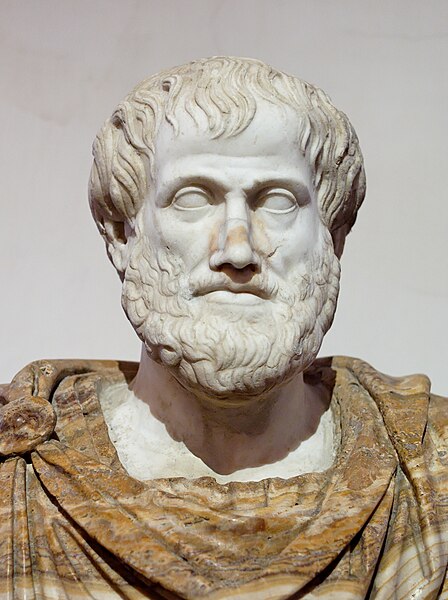
This week has been interesting because we shifted gears entirely into a new direction. Abandoning the technology unit almost entirely, we started a discussion on relationships and the different forms of mutual encounters with other humans. I found it interesting that Aristotle's findings so many years ago are still relevant today. Humans may evolve, but human interaction never changes. We have the same principles of friendship that Aristotle described over 2000 years ago. We still have friends that only share on common interest. We still have friends that are friends solely for business. We still have the "friendships of the good," or real friends. Cicero even described traits of friends that are still important to look for today, like his idea that honesty is the most important trait.

We shifted gears a little more midway through week to start the documentary "Sound and Fury". The film looks at life from the perspective of a deaf American family and their daughter who wants to undergo a cochlear implant surgery. What's so interesting is that most deaf people are actually highly opposed to this kind of surgery. It's hard for people who can hear to wrap their minds around why someone wouldn't want to be able to hear if they had the opportunity. Some would argue that because they don't know what they're missing, they don't really have a huge desire to become just like everyone else, which I believe is the case. If I've lived my whole life one certain way and someone comes along telling me that their way is better, I wouldn't believe them. Even if hearing is so much better (which no one can say that it is, because none of us have been deaf), I wouldn't want to change my way of life and step outside of the community that I've become a part of. I actually had no idea that there was this "deaf culture" among those who can't hear or are hard of hearing. The common language, interests, and "disability" bonds this huge of group of people that is quick to shun those that don't agree with their way of life. Now I don't know about you, but if I was part of this community for such a long time, I would do what I could to remain part of it.

Over this next week, I'd like to look a little deeper into the arguement over deaf culture. What are some other opinions on it? What makes it a culture compared to a community? Is it even a culture? Why do they hate those who have cochlear implants?
Sources:
Aristotle. Photograph. Wikipedia. Web.

Sunday, March 7, 2010

Week 22: Life Outside Information Super Highway

Last week I decided that I would take the initiative to finally "disconnect" like what we had been talking about for the past week. Throughout the week, I went day to day limiting my technology usage to as little as possible. I honestly don't use my cell phone much at all, so I wasn't worried about giving that up as much the Internet and television. Because it is pretty much impossible to cut the computer out of my life completely. I decided early on that it would strictly be used only for e-mail and homework (if I couldn't avoid using it for homework). I was actually able to go the course of the week only using the computer once, and it was solely for an e-mail that I knew was coming. However, I found myself during the first half of the week very antsy and on-edge, kind of like withdrawal symptoms. Actually, I think it was withdrawal symptoms. On the other hand, without the computer I found myself free to do so many things that I would tell myself "I didn't have time for." I went running. I'm supposed to be training for the Monument Avenue 10K, but I hadn't found time to go run in almost a month. I read a book, for fun. The last book I read for fun took me the entire summer, but I finished this within the week because I actually took the time to sit down and become engrossed in it. The outdoors felt like something so alien to me after such a long absence from them, and I began to notice how so many front yards go uninhabited these days. It felt refreshing to interact with friends on a sunny day down at the river instead of otherwise sitting in front of a computer screen waiting for someone to respond to my Facebook. By the end of the week, I didn't miss Facebook or failblog or any of those time-wasters that have been absorbing my life. I hope that this recent change in lifestyle will eventually become a permanent change.


This week was a lot like last, but the documentary added adults into the mix. Granted, I still feel like it was geared towards bashing high-schoolers and college kids for spending so much time on the Internet and with technology, instead of focusing on technology in the workplace. The first thing that stuck out immediately during the film was the segment on multi-tasking. That's one thing that I find myself doing a lot, typically with two to three browsers pulled up that I constantly juggle. What stuck out though, was the claim that multi-tasking is less efficient than focusing on one thing at a time. On the one hand, it makes sense because I don't have one constant train-of-thought that I can focus on when I'm multi-tasking. I have to keep jumping around to different ideas, which takes more time often leaves out many things that I wanted to say. However, it would appear that accomplishing multiple things at the same time would be a huger time saver, not waster.

What I found most interesting was this somewhat new adaptation of the MMOG to the workplace. I've been familiarized with the multiplayer online games because I live with two addicts. My brother and German student have both at one point in their lives played WoW or something similar to it, and tried to get me hooked as well. I don't care if someone gets enjoyment out of it, but I have a hard time grasping the relevance of bringing it to the office. It just doesn't seem very efficient to have employees focused on these fake "avatars" during conferences rather than the business at hand. Not to mention the fact that online games like Second Life really limit what can be accomplished in business meetings. Presentations can't be accompanied by PowerPoints or any other kind of visual, and employees will face constant distractions from the fantasy world around them. Whenever my dad is on a conference call, he seems more focused than I have ever seen him before. Yet, when companies use programs like Second Life, it doesn't seem to convey that similar necessity of being at full attention because when the boss can see your avatar, they have more than your voice to acknowledge your existance.

The film mentioned that some kids in Korea have actually died from spending too much time with modern technology, but I haven't heard of any national stories like that. Has it happened on U.S. soil? I'd like to do a little investigation to find out.
Sources:


Sunday, February 28, 2010

Week 21: Growing Up Online


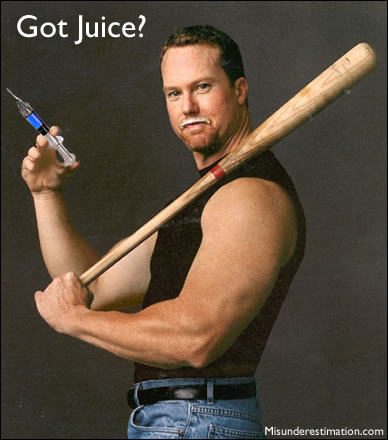
Last week I wanted to get another perspective on the whole steroids debate, so I started a long conversation with my German exchange student. He doesn't necessarily condone the usage of illegal steroids, but because he assumes that the majority of athletes use performance-enhancing drugs, we should just accept it and move on. He went on to say that there is going to be drug usage in sports whether we test or not, and plenty of athletes are just trying to keep up with the competition. Fans just want to see broken records, whether the athlete was juicing or not.

I have to admit, I disagree with almost all of this. First of all, though I don't deny some athletes uses illegal drugs, to say it's the majority is a brave assumption. To just accept it is as bad as the crime itself. We shouldn't just make exceptions and allow people to break the law; we need to take the best steps we can to prevent cheating in sports. Yes, athletes are trying to keep up with the competition, but that is all the more reason we need to crack down on drug usage. It'll prevent the pressure to juice up and feel the need to cheat to be able to keep your job. Fans do like to see record-breaking feats, but when they're accomplished through cheating, it completely destroys the excitement. When a record is broken honestly is when it's exciting and what the fans really want to see.

This week, we looked at growing up online, and what the pros and cons of living a life in front of a computer screen really are. With a large emphasis based in technology in today's society, lifestyle changes have been directly based on technological advancements. My parents' generation spent most of their childhood outside, interacting with others. When I look outside, all the front lawns in my neighborhood are typically empty. When I am outside, typically I'm isolated between a pair of iPod headphones as I enjoy nature, alone. Nowadays, most kids prefer all of their interactions to be anything but physical. Cyber relationships with God knows who is much easier than sparking conversation with someone face-to-face. And that's what society is constantly looking for, easier ways of doing things. I no longer have to call a friend from my house and hope he's at home to have a conversation. Instead, i can just shoot him a text while keeping up with five other simultaneous conversations. Want to see grandma but don't want to travel half way across the country? Teach her how to use Skype, problem solved. We used to look down on others for this addiction, citing them as nerds. Now it's the norm.

Most of us probably don't realize it, but there are certain important aspects of life that we miss out on when we choose to talk to a friend over AIM instead of meeting them at a coffeeshop to reconnect. I'm just as guilty as the next guy, but not a day goes by that I don't regret wasting my life in front of this stupid computer screen instead of going out and interacting. Sure, the internet provides us with plenty of information that we most likely wouldn't have found without page surfing, but what's not completely false is typically pointless anyways. I used to be able to give up stuff like the internet for the Lenten season, now I see kids struggling to give up Facebook for more than a week. Hell, I couldn't even type this blog up without checking my Facebook. The internet is a terrible, terrible addicon that most of us in class wouldn't admit that they have fallen victim to, yet the majority of us have. I lied about how long I'm on the internet a day during the class discussion. There were some other kids in class that I know did too, because I see them online everyday.

Next week, the only time I'm going to be on the internet is for homework purposes. Let's see how well I do. Hopefully, I'll be able to limit myself to e-Mail and Edline, but I doubt it. It'll be a struggle, but I'm interested in seeing what I do instead in my free time...
Sources:
Juicin' Photograph. Dangers of Steroid Abuse. Web. http://www.freewebs.com/ronat007/steroids-in-baseball.jpg.
The Batcomputer. Photograph. Gamespot. Web. http://ui11.gamespot.com/1450/batcave_2.jpg.

Sunday, February 21, 2010

Week 20: Cheater!

Last week I wanted to try to find some examples of proof that honor codes at school were either working or a waste of time. From what I could find, most statistics claimed that the Honor Code hinders cheating. However, there aren't any clear-cut statistics out there that show exactly how efficient it is in cutting back the amount of cheaters in schools. In my opinion, being forced to write the Honor Code on assignments makes it more difficult for me to want to cheat on them, however, students that have low enough morals to cheat have low enough morals to lie about it. The most effective aspect of the Honor Code is the fact that the idea of punishment is implied for any violation. With no punishment, it would most likely be zero percent effective. This article does a nice job at going more in depth into what seems to work at what doesn't.

So this week we focused mainly on cheating, the different forms of cheating, and why it's wrong. One of the main topics we looked at was cheating in sports using performance enhancing drugs. Should an athlete be able to get away with using drugs to make themselves better than the competition? After all, it is their job and they're just trying to keep up with the Joneses. No. An athlete cannot use the excuse that they were just "keeping pace with their competition," when caught with illegal drugs. When someone earns a trophy or medal, they should do exactly that; EARN it. Rankings are all about someone's natural skill level along with the amount of time they put into practice and working out. When someone deviates from this to unnaturally enhance their body, their cheating the system, their coworkers, and themselves. If I were to have a cheat sheet for a test, and the only one in the class who had one, it would give me an unfair advantage over all the students in the class, including the naturally smart ones and the ones who spent hours studying. The same goes for performance enhancing drugs. It's not leveling the playing field, it's manipulating it for personal gain.

Another discussion we delved into was about the case studies we looked over in chapter 2. It looked into various scenarios students might experience in college and provided a dilemma for each situation. Every scenario gave the reader in decisions that couldn't really result in the greatest good, because someone was always left unhappy, no matter what the decision was. The scenarios were more opinionated like who was right and who was wrong in the situation, and didn't have a clear answer.

Lastly, we started looking at the internet and how it's had a major role in the lives of kids these days. When our parents were growing up, private lives were actually private, and nobody knew what everyone else was doing every second of every day. However, with technology continuously changing at an alarming rate, society is forced to keep up. Now, kids can talk to their friends any time and anywhere, and even scarier, people can change their identities online. The video we watched interviewed one girl who hid herself behind lingerie and make-up online as to not expose who she really was. She looked like a 20-year-old at age 14. With increasing technological advances, social aspects of life have become less personal as people prefer to interact through technology rather than in person. Information can also be accessed at the snap of a finger, which also intertwines with the aforementioned topic of Honor Code violations.

So this upcoming week, I'd like to look more at the steroids debate and see what the other side has to say, if there even is another side.

Sources:

Computer Nerd. Photograph. 108 Red Stitches. Web. http://4.bp.blogspot.com/_vG4-JXzlYeU/R1C9-0bWeoI/AAAAAAAAAHM/hO1LcWOWRzE/s1600-R/computer%2Bnerd%2B%2B%2BLimpet%2B2%5B1%5D.JPG.

Got Juice? Photograph. Tony Sports. Web. http://tonysports.files.wordpress.com/2010/01/mcgwire.jpg.

"Honor Code Hinders classroom Cheating." The Reflector [Mississppi State University]. Print.


Sunday, February 14, 2010

Week 19: On My Honor...

So last week I wanted to find out if there was any more evidence out there that support Zimbardo's theory that good people could be turned evil. Because experimenting with human interactions became illegal after Zimbardo's Stanford Prison Experiment, there wasn't really any other way people could test his theory. However, it does explain many current events and how so many people deemed "the nicest guy" were able to commit murder.


This week we discussed the importance of honor codes at schools and analyzed the codes of a few colleges. Most schools had the same basic codes and typically a breach in the code was similar across the board. The most common was the violations based on cheating, stealing, and plagiarizing work. Basically, if it isn't 100% yours, it's against the school's honor code.

Penalties for breaking the code ranged from academic probation to expulsion. Universities hold their students and falculty to the highest expectations, and when someone doesn't live up to the expectations or hinders the community's experience, serious reprocusions occur. Because the campus works much like any other society, falculty and students are expected to hold the honor code to the highest regard in order to keep it functioning efficiently.

I found Liberty University's Honor Code particularly interesting and far different from all the others. Liberty bases its code solely off of morals, so any unethical violation of Christian morality is dealt with through punishment. Also, any students witnessing the breach in the Code are expected to report their classmate to authorities, or they will receive the same punishment. The college places most of the responsibility on the students to govern themselves.

We also discussed the internet's newly found role in cheating and loopholes. The internet serves as a great, convenient resource of information, but also makes cheating easier and provides less chances of getting caught. It scews the lines of what's acceptable and what's not and makes it more difficult to create a fitting honor code. Many students might not even realize the credibility (or lack thereof) of their sources and don't notice that their breaking the Honor Code.

In the coming weeks, I'd like see how effective the Honor Code really is. Does writing the code on quizes and tests really stop kids from cheating?

Sources:

Cadet Honor Code. Photograph. Over-thinking It. Web. http://www.blogger.com/Cadet%20Honor%20Code.%20Photograph.%20Over-thinking%20It.%20Web.%20%3Chttp://www.overthinkingit.com/wp-content/uploads/2009/01/honorcode.jpg%3E.

Liberty University Logo. Photograph. Liberty University. Web. http://www.blogger.com/Liberty%20University%20Logo.%20Photograph.%20Liberty%20University.%20Web.%20%3Chttp://api.ning.com/files/NJlPIT6QVsx3PIwiUvQscKNObAq-zt-lYy95DmVWQl2snzQvfISOJCeN6l5AcEpsEP6UgOGsJLMv70innOfgJnY*XLgRNFwW/libertymonogramstda_cmyk.jpg%3E..


Wednesday, February 3, 2010

Week 18: More Experimentation!


Last week I asked myself why during the experiments, most people deviated from what we would consider the norm and found themselves conforming to the pressures set by the experimenters. There are plenty of in-depth studies that look into this, but what I found most interesting was the fact that the participants in the Asche experiment were comfortable performing their duties after the experimenter explained that he would assume all the blame. It seems like that wouldn't be enough to sway one's moral convictions, but history shows us that this is not the case. If we look at something like the Nuremberg trials, we see that most of the higher ranking Nazi officers claimed that they were just following orders. The experiment shows that conforming to an authority figure is not only the easier way, but the preferred way. As long as we aren't the ones to be held accountable, we can find ourselves doing things that we would never expect from ourselves. In the end, we really are the ones to be held accountable, but as the situation presents itself, we aren't aware of this until the consequences make themselves apparent.

This week, we took a deeper look into the psycological experiments we had been introduced to in the previous last week, focusing on the Asche and Stanford experiments. We watched a video where Primetime repeated the Asche experiment to see if the results would differ from its initial run. I found it interesting that they weren't, proving that a change in society hasn't affected human nature over the course of a few decades. It was also interesting that those interviewed afterwords were so quick to lay the blame on the experimenters, claiming that they were just following orders. Others claimed that they could tell the man in the other room was faking it. No one came forward and said that they handled themselves poorly in the difficult situation.

We also watched a speech given by Philip Zimbardo, the mastermind behind the Stanford Prison Experiment. His lecture looked deeply into the behavior of people and what classifies someone as good or evil. The experiment showed that good people can be driven to do bad things based on the situation they are placed in. In other words, the situation can show a person's true nature. The experiment also showed that authority can easily be abused. When Zimbardo placed the prison guards in the "prison" he gave them no instruction, yet they pursued the roles of violent, malicious guards. Zimbardo went on to explain the different ways people can be turned evil, but summarized it into three categories, either a person is naturally evil, they were persuaded by others, or they were persuaded by the environment they grew up in. He also explained what it meant to truly be a hero, which means someone that deviates from the norm for the betterment of others. The fallacies of superheroes and martyrs were exposed, and Zimbardo explained that these are horrible role models for children because their not realistic role models.

Zimbardo made a lot of good points. This week I'd like to look to see if there's anymore evidence out there that supports his theories as well as the Stanford Prison Experiment. Can good people really be turned evil?


Sources:
Philip Zimbardo. Photograph. Altervista.org. Web. http://www.blogger.com/Philip%20Zimbardo.%20Photograph.%20Altervista.org.%20Web.%20%3Chttp://baw2008.altervista.org/DOCUMENTS/images/Zimbardo.gif%3E.

Tuesday, January 26, 2010

Week 17: Experimentation!

Last week I decided to perform a little social experiment by applying the Golden Rule to my week. I have to admit, I'm quite exhausted. I've made a few too many commitments and I've found it difficult to keep up with everything. No one really took advantage of me per say, but there were a few favors that I would of generally turned down that I found myself doing. On the positive side, everyone else was repaying kindness with kindness, and I found the few favors to be worth it.

So this week we spent the majority looking a group of social experiments that dealt with human reaction in a certain scenario. We kicked off this week with a series of games that exposed the ideas of cooperation and taking advantage of the situation. In most cases, the player was forced to make a decision that would either benefit only themselves, the other player, both, or neither. Most of the games result in my teammate and myself finding the best possible way to win the game at the expense at the other player. However, in the game of chicken, we realized that we could only benefit the other player. That being the case, we both took huge hits at the expense of our own scores to make sure the other player didn't succeed.

We concluded the week with an introduction to sociological experiments that dealt with the moral convictions of a participant in a given situation. I found it interesting that participants acted in the exact opposite way of what we would deem socially acceptable or how most of us would like to think we'd act. For example, the Asche Experiment placed one participant ina room with a group of actors. When they were given a question with an obvious correct answer, all the actors purposely answered incorrectly. The participants, for fear of ridicule, went with the majority and chose the incorrect answer. We'd all like to think that we'd be that acception and be that lone rebel, but in all honesty, few of us would. Even when we are unfamiliar with others around us, the desire to blend in is still apparent and some of us would even convince ourselves that the group was giving the correct answers in order to justify going against our morals.

The Milgram Experiment gave far more surprising results than I would have expected. Like Asche, this experiment has one participant and everyone else is an actor. The participant is in a room with an experimenter and is instructed to give another "participant" in the next room an electrostatic shock every time they answer a question incorrectly. The person being shocked can clearly be heard screaming in agony from the next room over, but the pressure from the experimenter caused the participants to continue shocking the "student". Again, I'd like to hope I'd walk away from the experiment, but the idea of an authoritavie figure in the room puts me under the impression that I'd submit, something most of us do around a person of higher authority.

We'd all like to be that rebel that follows their morals instead of the group or the authoritative figure, but more often than not, we conform. I'd like to know why. This week ?I'd like to read up on why we feel the need to conform when placed in these tough situations. Is it because our sense of judgement is blocked? Is it because of how society raised us? I'm interested in reading up on subjects of the various experiements and hearing what their explanation for their actions was.

Sources:
Asch Experiment. Photograph. Experiment Resources. Web. .

Milgram Experiment. Photograph. Wikimedia. Web. .


Monday, January 18, 2010

week 15/16: The Golden Rule

So this past week, we eased our way back into the routine by finishing up watching everyone's documentaries that we all spent so much time on, and I must say, I was very impressed with how everyone's turned out. It was obvious that every group spent a large sum of time and effort on each of their projects, and the results were outstanding. I was very surprised that most groups took an ethical approach at their films, even though it is the harder route to take. Because of this, most of the documentaries made a very strong point in what they had set out to talk about. The one or two groups that chose the unethical approach seemed to weaken their message through less-than-honest approaches, but still provided excellent documentaries nonetheless.
This week we focused mainly on the Golden Rule and how it fits into society today. The Golden Rule is something that we all grew up with, "Treat others as you would like to be treated." On paper it seems pretty simple and like a good idea that everyone should abide by, but when we delve deeper into an in-depth analysis, the rule becomes more complicated than it seems. Sure, treat others as I want to be treated, easy enough. But what if I don't want to be treated well or don't care how others treat me, then do I have the right to treat others poorly? Certainly not, but because the Golden Rule doesn't specifically state that, one could argue that it implies that very idea.

Another flaw with the rule is the lack of instruction for someone being taken advantage of. If I were to lend someone money and they requested more without paying me back the original amount, should I be expected to give it to them? Sure, if I were in that situation, that's what I would want someone to do for me, but I'd also never want it to stop. I'd keep requesting money because if they abide by the golden rule, they would continue to give it to me.

These are two of the many examples of flaws within the Golden Rule. Does that mean we shouldn't follow it? No, to an extent. Like anything else, there's certain situations where it would apply and certain areas when we just need to decide it's null and void. Anything that we take the time to over-analyze is going to show flaws, but the basic idea is still a good one, because if we try to live the way the rule intends us to live, then society is a better place.


Is there anything that could take the place of the Golden Rule? There are a few other rules on ethical codes that we discussed, including the silver rule, which is very similar to the Golden Rule. "Do not do unto others as you would not have them do unto you." The main difference between this and the Golden Rule is that it does not imply to be obediant in every situation. It still acounts for an idea of non-violence toward your neighbors, but is also takes into account the idea that one should not let themselves be taken advantage of. It still however, contains flaws, some of which were also seen within the Golden Rule.

This week we also looked at what it really means for something to be considered ethical. We looked at the idea of the "Greatest Good", which means, when we are given one option (the "take it or leave it" scenerio), the decision we make that results in the greatest good is the most ethical decsion. What defines greatest good though? If I benifit from cheating on a test as opposed to no one benifitting, is that still the most ethical approach? In theory, if we take the concept 100% literally, then maybe. But, most people would tell you that in the long run, cheating is, though not directly, still detrimental to my peers because school acts like a community.

Essentially, it's important to remember that things like exploitation and cheating for means of personal gain is not the ethical way of doing things. Machiavelli might tell you that it is the most effective, which I can't argue with, but it isn't worth it to cause the downfall of others to benifit yourself and a few others.

This week I'd like to pay a little more attention to see if I'm faced with a decsion that could result in the greatest good and see if I choose that option. I'd like to also apply the Golden Rule as much as possible over the course of the next week to see what the outcome will be. Will people take advantage of me or treat me well as a repayment?

Sources:
Greatest Good. Photograph. KCTS9. Web.

Monday, January 4, 2010

Week 13/14: Preparing for break


So last week I wanted to look at what really sells a product and what advertisers do to sell their goods without the consumers even noticing. To find out more about this subliminal advertising, the class analyzed two stores selling similar products, and we looked in depth at store layout, lighting, music, and a lot of other aspects of the store that the consumer wouldn't typically notice or pay attention to. What we found was that every little detail, whether we notice it or not, helps or hurts the producer greatly. A store with more walking room and better lighting will make someone feel more inclined to shop there instead of a darker, smaller store that sells the same thing.

It is amazing to see how much effort an advertiser will put into something that generally goes unnoticed unless we watch out for it. These techniques move to persuade the consumer in a certain direction, but most of the time, we aren't even aware of the manipulation that takes place during a commercial or just walking through a store. These techniques are generally very effective, whether they use humor like Jim Gaffigan's Sierra Mist commercials, or try to captivate the audience with a sense of elegance, like most car commercials. They still get stuck in your head regardless.

Ok, so lately our groups have been working diligently on our documentaries. It was deffinately a lot more work than we originally expected. The hardest part throughout the making of the film, was finding the right level of sensitivity to use in the documentary. We struggled with finding a good balance because on the one hand, we didn't want to offend parents by portraying their children without any censorship or any kind of filter. On the other hand, we didn't want to be so over-the-top with sympathizing a group of people that we really had no reson to feel sorry for. We had to make sure we weren't dehumanizing anyone. With that came the need for permission, which was also difficult to obtain. I had to type up letters to distribute to all the parents of students within the MOID program, which also took a bit longer than expected to receive a response.

Lastly, we had to find time. With exam week approaching much faster than we would have liked it, our deadline was much sooner than we had prepared for it to be. we were also limited on filming days because we had to work around what was convenient for Mr. Early and Mrs. Spurr. We couldn't just show up to their classroom one day and ask to do some filming. The editing job was very last-minute, and I've always hated editing because it's truely only a one man job.

Other than a few obstacles, setbacks, and large levels of stress that we experienced, I do feel like this was a great experience and I really did enjoy getting to make this film. I learned a lot more than I had expected, about documentaries and the MOID program, and I think my other group members did too.

This week I'd like to look at how others conducted their documentaries and compare our ethical approach to other groups' unethical approaches. What techniques did they use? How did their message delivery and and the viewers reaction to it differ from ours?

Sources:

Beard combover
. Photograph. Price Scope. Web. .

Sierra Mist- Beard Combover. Perf. Jim Gaffigan. Youtube. Web. .